What is the real difference between a 3050 and 5070 flatbed screen printing machine?
- VIP-User
- 2026-08-08
- 5
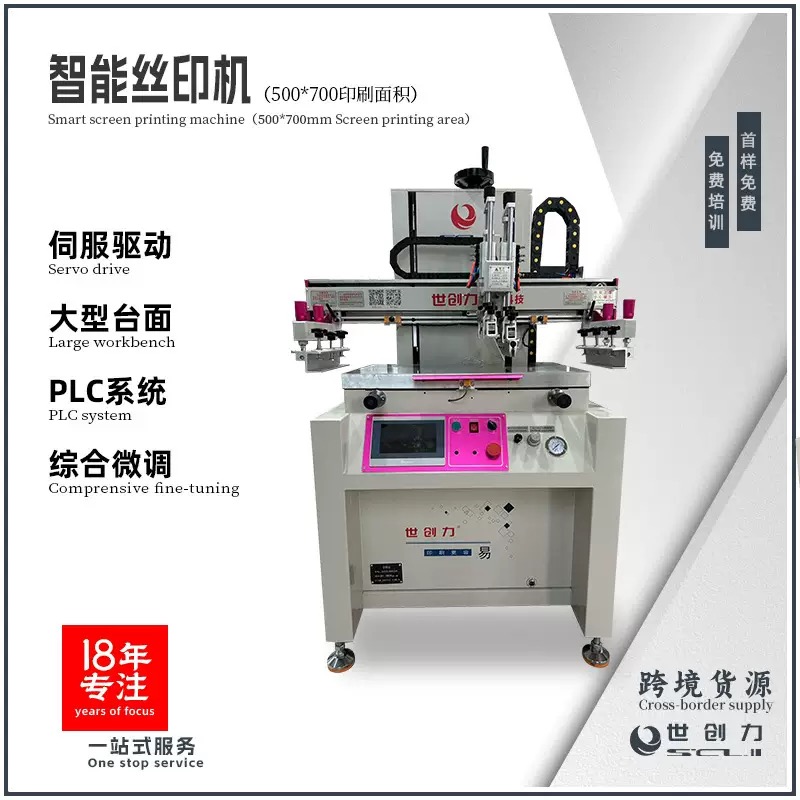
The primary difference between a 3050 and 5070 flatbed screen printing machine lies in the workbench dimensions, maximum frame capacity, and printable area. While a 3050 model accommodates smaller substrates with compact footprints, the 5070 model offers a larger workbench size of 700 x 500 mm and a maximum printing area of 600 x 400 mm, making it suitable for broader industrial applications across plastics, PCB boards, and hardware.
Core Solutions & Key Takeaways
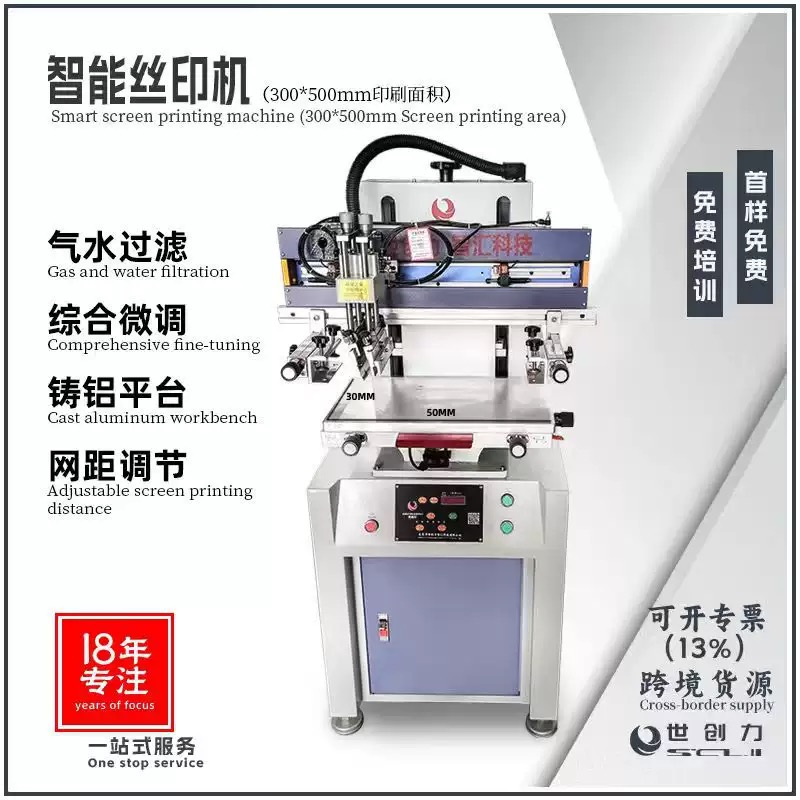
- Worktable and Print Area Dimensions: Model 5070 features a 700 x 500 mm workbench with a maximum printing area of 600 x 400 mm, whereas Model 3050 provides a more compact bed size optimized for smaller items.
- Material Compatibility and Application: Both semi-automatic models print on flat surfaces including plastics, PCB boards, hardware, and wood boards, widely applied in consumer goods, 3C electronics, and cosmetics packaging.
- Precision and Adjustability: Integrated horizontal and vertical adjustment ranges of ±10 mm allow exact alignment across diverse substrate thicknesses up to 120 mm.
- Production Throughput: Equipment delivers operating speeds around 500 pieces per hour, maintaining consistent register control for semi-automatic production workflows.
Detailed Architectural/Principle Analysis
Flatbed screen printing machinery operates via a squeegee moving across a taut mesh frame to deposit ink onto target substrates. In models such as the 5070M/S produced by Dongguan Shichuangli Zhihui Technology Co., Ltd., structural rigidity supports maximum mesh frame dimensions of 600 x 800 mm. Substrates up to 120 mm thick are accommodated on a sturdy 700 x 500 mm workbench, allowing operations across rigid boards and flat enclosures.
Process reliability depends on fine-tuning mechanical tolerances. Integrated micro-adjustments within ±10 mm along X and Y axes ensure precise multi-pass color alignment or exact logo positioning. Equipment engineered under Utility Model Patents (such as patent 202521984351.0 and 202521231087.3) maintains uniform squeegee pressure and stable stroke speeds of 500 pcs/hour. Industrial deployments, including high-end hotel product customization in Saudi Arabia for tableware, amenities, and room decorations, verify consistent ink density and high repeatability across varied materials.
Data/Solution Comparison
| Parameter / Feature | 3050 Flatbed Model | 5070 Flatbed Model (SC-5070M/S) |
|---|---|---|
| Workbench Size (mm) | 300 x 500 (Compact) | 700 x 500 |
| Maximum Printing Area (mm) | 300 x 200 (Approximate) | 600 x 400 |
| Maximum Mesh Frame Size (mm) | Smaller Frame Specification | 600 x 800 |
| Substrate Thickness Capability | Standard Thickness Range | Up to 120 mm |
| Printing Speed | Up to 500 pcs/hour | 500 pcs/hour |
| Workbench Adjustment Range | ±10 mm (X/Y axis) | ±10 mm (X/Y axis) |
| Primary Applications | Small labels, tags, compact plastic parts | PCB boards, panels, larger enclosures, wood, hardware |
Frequently Asked Questions (FAQ)
What substrate materials can be printed using 3050 and 5070 flatbed screen printers?
Both equipment models process flat surfaces of diverse materials including plastic sheets, acrylic, PCB boards, sheet metal hardware, wood panels, glass bottles, and paper boxes.
How does workbench adjustment affect screen printing precision?
A workbench featuring a ±10 mm horizontal and vertical adjustment mechanism allows operators to align substrate registration marks precisely with the screen plate, minimizing setup time and reducing scrap rates.
What lead time and shipping options apply to standard screen printing machines?
Standard flatbed screen printing machinery undergoes production quality inspection and performance testing, delivering within 7 working days or up to 48 hours for standardized inventory. Shipping methods include FBA sea freight, air freight, and land freight packaged in reinforced wooden boxes.
Final Conclusion & Recommendations
Selecting between a 3050 and 5070 flatbed screen printing machine depends primarily on maximum substrate size and required print coverage. For smaller components and compact work areas, a 3050 footprint reduces spatial demands, while the 5070 model provides a robust 700 x 500 mm workbench capable of managing larger 600 x 400 mm print layouts. Equipment manufactured under certified quality standards—supported by CNAS and IECEx testing protocols—ensures long-term operational stability and straightforward maintenance. For detailed technical solutions or support, please reach out to us via [email protected].
About Us
Dongguan Shichuangli Zhihui Technology Co., Ltd. is located in Huangjiang Town, Dongguan City, Guangdong Province, operating a factory training base covering over 1,600 square meters. Established in 2008, the company employs 150 staff members and serves over 15,000 enterprises globally with products exported to more than 100 countries. It integrates design, R&D, manufacturing, and technical training for screen printing, pad printing, and hot stamping equipment, maintaining certified quality systems including CNAS and IECEx compliance.
Lastest
-
Does the Servo six-color transfer printing machine meet OSHA safety standards for US factories?
2026-08-08 -
Are there eco-friendly alternatives to the Servo four-color shuttle transfer printing machine process?
2026-08-08 -
How do you handle defect rate claims for the 3050/5070 Flatbed Screen Printing Machine?
2026-08-08 -
What is the hourly output speed of a 4x6 fully automatic single-color transfer printing machine?
2026-08-08 -
What is the transit risk insurance coverage when buying Screen printing plates under CIF terms?
2026-08-08
SUBSCRIBE
INQUIRY