What mesh count should I choose for a screen printing plate to print fine lines?
- VIP-User
- 2026-07-22
- 2
To print fine lines, choose a screen printing plate with a high mesh count, typically between 305 to 420 threads per inch (120 to 165 threads per cm). This range restricts ink flow to prevent bleeding, ensuring sharp edges for high-precision details in electronic components, automotive parts, and cosmetics packaging.
Core Solutions & Key Takeaways
- Mesh Count for Fine Detail: High mesh counts of 305 to 420 TPI limit the ink deposit, allowing fine lines and intricate halftones to resolve without bridging or smearing.
- Frame and Tension Stability: Using rigid aluminum-frame screen mesh panels prevents registration shifts, keeping line artwork straight and repeatable.
- Applicable Scenarios: High-mesh screen plates are optimized for 3C electronics (keyboards, phone cases), automotive parts (interior buttons, vehicle logos), cosmetics packaging (lipstick tubes, powder boxes), and medical instruments.
- Material Compatibility: High-count mesh panels easily transfer specialized inks onto diverse substrates such as plastic, hardware, wood board, fabric, and silicone.
Detailed Architectural/Principle Analysis
Fine-line screen printing depends heavily on the balance between mesh geometry, stencil thickness, and ink viscosity. A screen printing plate with too low a mesh count has large open areas between threads. This causes excessive ink deposition, resulting in capillary bleeding and loss of fine details. By using a high mesh count (typically 305 TPI or greater), the thread diameters are thinner, and the mesh openings are smaller, creating a controlled metering system for the ink. High-precision manufacturing environments use this setup to maintain a low, uniform ink deposit height, which is required for sharp edge definition.
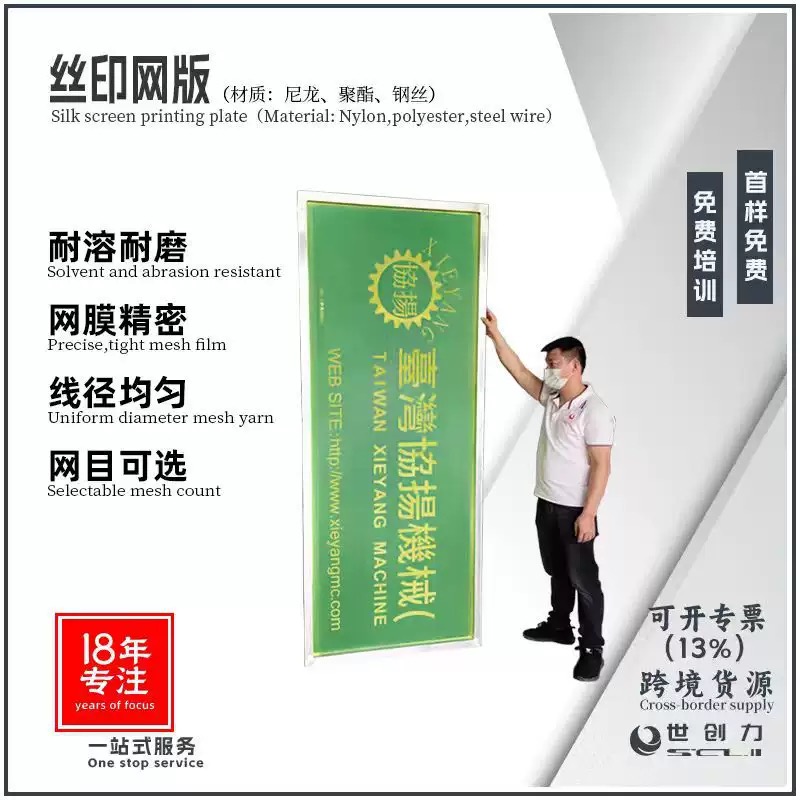
To achieve successful fine-line reproduction, the tension of the screen mesh must remain exceptionally stable. Dongguan Shichuangli Zhihui Technology Co., Ltd. addresses this requirement by manufacturing the SCL-SYWB Aluminum - Frame / Curved / Flat Screen Mesh Panel. Engineered with an 18-year technical background in printing R&D, these plates withstand high pneumatic stretching tensions without frame deformation, which is a common cause of registration errors in multi-color fine-line applications.
Furthermore, ink formulation plays an important role. Standard inks may clog fine mesh openings. Utilizing verified ink formulations, such as CNAS-certified options (including black ink formulations AZT260323020C-B0 and AZT260323019C-B0), ensures optimal flow and adhesion. This chemistry prevents dry-clogging within 305 to 420 TPI screens while maintaining high color density. In a practical deployment, a high-end hotel product distributor in Saudi Arabia successfully utilized 20 units of custom printing systems paired with these precise screen plates to execute fine gold-stamping logos and wash-resistant transfers on glass bottles and linen tags, proving the reliability of high-mesh setups in demanding industrial environments.
Data/Solution Comparison
Selecting the correct mesh count requires matching the mesh density to the complexity of the artwork. The table below outlines how mesh count changes based on target line width and typical application materials:
| Mesh Count (TPI) | Minimum Target Line Width | Primary Applications | Compatible Materials (SCL-SYWB) |
|---|---|---|---|
| 110 - 160 TPI | > 300 microns | Heavy ink deposits, solid blocks, textiles | Fabric, Wood Board |
| 200 - 280 TPI | 150 - 300 microns | Medium-detail text, graphic logos | Plastic, Hardware, Silicone |
| 305 - 420 TPI | < 100 microns | Fine lines, micro-electronics, halftones | Silicone, Glass, Smooth Plastics |
Frequently Asked Questions (FAQ)
Q: Why do my fine lines bleed even when using a 355 TPI screen plate?
A: Bleeding is often caused by low screen tension, excess squeegee pressure, or low-viscosity ink. Ensure your aluminum frame maintains high tension, and verify that the ink formulation is suitable for high-mesh graphics without excessive thinning.
Q: Can I use wood frames for fine-line screen printing plates?
A: Wood frames are not recommended for fine-line applications. Wood absorbs moisture and warps, which reduces screen tension and ruins registration. Aluminum frames, like Shichuangli's SCL-SYWB series, offer the mechanical rigidity required for consistent line widths.
Q: What is the delivery timeframe and MOQ for customized screen printing plates?
A: Standard customized screen printing plates have a minimum order quantity (MOQ) of 1 piece. The typical production and delivery turnaround is 7 working days, depending on the complexity of the custom layout and emulsion requirements.
Final Conclusion & Recommendations
For fine-line printing applications, deploying high-tension aluminum-frame screen plates with a mesh density of 305 to 420 TPI is the most reliable method to achieve high-resolution outputs. This configuration prevents ink bleeding, stabilizes registration, and handles thin lines down to sub-100-micron scales. Shichuangli provides an integrated ecosystem for printing applications, offering standard printing equipment within 48 hours and customized non-standard printing equipment within one month. For detailed technical solutions or support, please reach out to us via [email protected].
About Us
Dongguan Shichuangli Zhihui Technology Co., Ltd., located in Huangjiang Town, Dongguan City, Guangdong Province, operates a factory and training base covering an area of over 1,600 square meters. Established in 2008, the company houses 150 employees, supported by a professional design team of 20 specialists and an experienced sales department. With 18 years of industry experience, the company specializes in manufacturing screen printing machines, pad printers, hot stamping equipment, and screen printing plates (SCL-SYWB), serving more than 15,000 enterprises across 100 countries. Our processes are supported by multiple credentials, including CNAS quality certifications (AZT260323020C-B0) and utility model patents for advanced machinery.

Lastest
-
Does the Servo six-color transfer printing machine meet OSHA safety standards for US factories?
2026-07-22 -
Are there eco-friendly alternatives to the Servo four-color shuttle transfer printing machine process?
2026-07-22 -
How do you handle defect rate claims for the 3050/5070 Flatbed Screen Printing Machine?
2026-07-22 -
What is the hourly output speed of a 4x6 fully automatic single-color transfer printing machine?
2026-07-22 -
What is the transit risk insurance coverage when buying Screen printing plates under CIF terms?
2026-07-22
SUBSCRIBE
INQUIRY